Movement spaces6 min read
Designing for stillness: rooms for yoga, meditation and movement
A room for yoga or meditation is measured not by how much happens in it, but by how little gets in the way. Five decisions we return to on every project.
By Julian ReyesPartner, New York
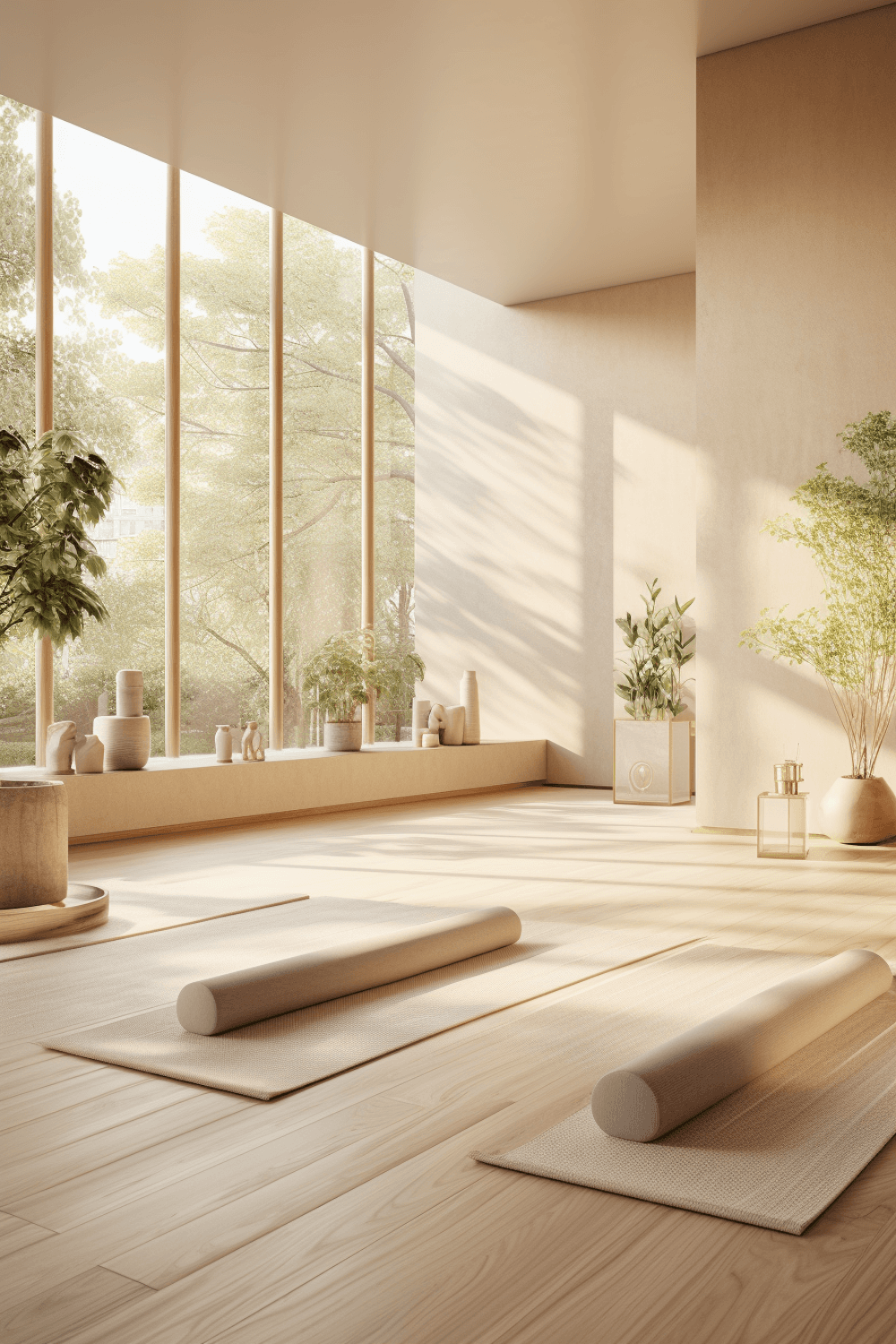
Most rooms are designed to be used. A room for stillness is designed to be inhabited, which is a different brief altogether. Its success is measured not by how much happens in it, but by how little gets in the way.
We design spaces for yoga, meditation, breathwork and slow movement for retreats, homes and workplaces. The details vary from project to project, yet the same handful of decisions return every time.
Begin with the floor
In a movement space, the floor is the surface people know best. They kneel on it, lie on it and stand barefoot on it for an hour at a time. We favour solid timber, usually oiled oak, laid over a structure with a little give. It should feel warm, quiet and even, with no thresholds or changes in level to catch a foot.
Give the ceiling a calm rhythm
When people lie down, the ceiling becomes the view. A busy ceiling of fittings, grilles and access panels is surprisingly unsettling. We gather services to the edges and use a simple, regular rhythm of battens or beams that the eye can rest on.
Frame one view, not many
A single generous opening onto water, trees or sky is more restful than windows on every side. It gives the room an orientation, a place for attention to settle, and a sense of the weather without the distraction of activity outside.
The room should hold silence the way a bowl holds water.
Design the sound as carefully as the space
Hard, parallel surfaces make a room echo, and echo makes people self-conscious. We balance timber and glass with absorbent finishes, soft textiles and irregular surfaces, aiming for a room where a quiet voice carries without ringing.
Let people arrive slowly
The threshold matters as much as the room itself. A small changing area, somewhere to leave shoes and a short corridor with lower light allow people to set the day aside before they step inside.
- A warm, continuous floor without changes in level
- Services gathered to the edges of the ceiling
- One framed view instead of many
- Acoustics balanced for a quiet voice
- A slow, dim threshold before the main room
None of this guarantees a particular feeling. What it can do is remove the small frictions that keep people from settling, which, in our experience, is most of the work.